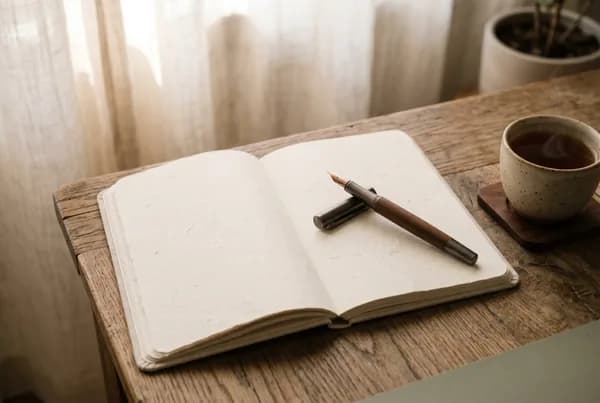

There was a list I keep meaning to finish. I made it on a Tuesday, in good handwriting, with the kind of optimism that comes before you've actually started anything. And somewhere near the bottom, below the emails and the call to the plumber and the present I needed to wrap, I had written, almost as a joke: rest. As though it were a task. As though it, too, would only count once it was crossed off.
I have spent a long time treating rest as something I had to earn. A reward at the end of a day that never quite ended. A thing I was allowed to have only once everything else was done, and everything else was never done, so I rarely had it at all.
And on the rare afternoon I did stop - really stop, no laundry folding to disguise it as productive - a small, familiar voice would arrive almost immediately. You should be doing something.
You know that voice. I think most of us are on a first-name basis with it.
It is the discomfort that rises when you sit down in the middle of the day with nothing in your hands. The flicker of guilt when you read for pleasure on a weekday morning. The way "doing nothing" starts to feel like something you'd want to explain, or apologise for, if anyone walked in.
What strikes me now is how generous I have always been with that permission for everyone else. A friend tells me she's exhausted, that she spent Sunday in bed and barely moved, and I mean it completely when I say: good, you needed that, I'm glad. I would never ask her what she'd done to deserve it. I would never suggest she could have used the time better. The kindness is automatic, effortless, real.
And then I turn that same lens on myself and it goes cold.
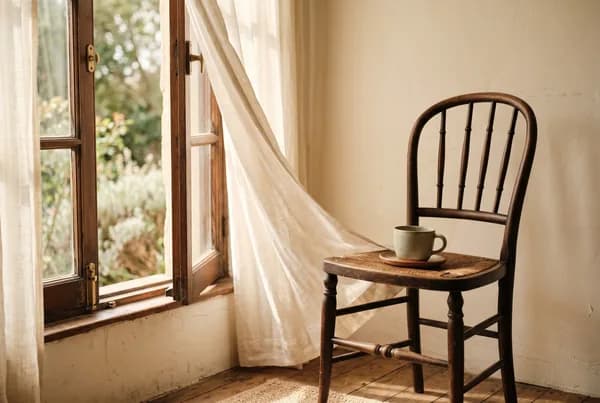
I noticed this most clearly a few months ago. It was a grey Wednesday and I'd finished the morning's work earlier than expected, and I had ten minutes before I needed to leave. Ten unclaimed minutes. So I sat by the window with a cup of tea going slowly cold in my hands and I watched the rain come down the glass.
That was all. I wasn't planning anything. I wasn't even thinking, particularly.
And within about ninety seconds, the guilt arrived like a draught under a door. There were emails. There was a cupboard I'd been meaning to sort. Surely ten minutes could be used. I felt, sitting in my own home, doing the most harmless thing a person can do, as though I were getting away with something. As though stillness were a small theft I'd be caught for.
I want to tell you how absurd that is, because it is, and because naming it out loud strips some of its power. I was guilty for watching rain. Not for harming anyone. Not for neglecting a single soul who needed me. For ten quiet minutes that belonged entirely to me, and that I almost couldn't bring myself to keep.
Here is what I have come to think, slowly, and without quite being able to prove it.
The guilt isn't really about laziness, whatever it tells you. Underneath it, I think, is a quiet belief that your worth is something you produce - that you are loved, or safe, or allowed to take up space, in proportion to what you generate. So stillness feels dangerous. If you're not producing, who are you. If you stop, perhaps the whole thing falls down.
But I have stopped, more than once now, and the whole thing did not fall down.
That is the thing nobody mentions. You can put it down - the doing, the proving, the relentless small justification of your own existence - and the floor holds. The world does not file a complaint. The people who love you do not love you less for the cupboard staying unsorted. The only voice that objects is the one inside you, and it turns out that voice can be thanked, gently, and not obeyed.
What changed for me wasn't a grand decision. It was something much smaller. I started letting myself have the ten minutes without the story attached - without earning them first, without promising to make up the time. I let rest be a thing I was simply allowed, the way I'd let my tired friend be allowed, no ledger, no terms.
The permission was always mine to give. I had just been handing it to everyone but myself.
So if there is anything I'd offer you, it is only this, and it's small enough to do today. The next time you find yourself still - caught in an unexpected pause, a held breath, ten minutes you didn't plan for - and you feel that old draught of guilt come under the door, see if you can let the stillness stay anyway. Not because you've earned it. Not because the work is done. Just because you're a person, and you're tired, and a person is allowed to rest.
You don't have to do anything with the quiet. You don't have to make it productive, or turn it into a practice, or report back on what it gave you.
You are allowed to stop. Not when everything is finished. Now, in the middle, with the rain on the glass and the tea going cold and nothing at all to show for it.
That was always allowed.
It was only ever you, waiting to be told.